
I used to think of Palm Sunday as a classic moral reversal tale: you expect a king to come on a warhorse, but Jesus purposefully downgrades his vehicle to be humble, so that’s why we need to be humble, etc.
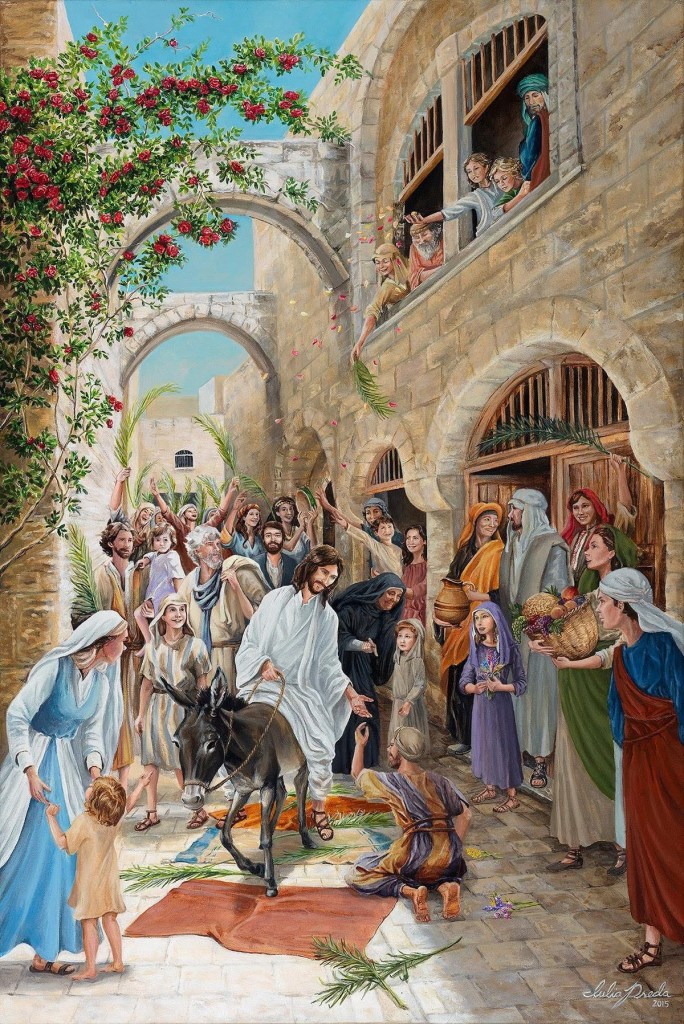
But now I see it more deeply as metaphysical. As I said the other week, the Passion logically precedes the universe and helps us decode what is real. That means the triumphal entry is where we should expect to find a definitive truth about the universe. The key axiom appears to be: Godhood is humble, power is lowly, and glory broods like a mother hen.
This means that the warhorse is a representation of evil, a counterfeit. A conquering king upon his steed is a falsehood. There is no such thing as power that doesn’t come as upon a donkey. In fact, that Jesus chose the donkey is a restatement of his rejection of archetypes like the warrior-brute Esau or the chariots of Egypt. These are illusions that claim power but have only succeeded at twisting its definition.
The donkey isn’t the less glorious animal, but the only vehicle that could possibly seat God and reveal what power and glory really are. Our tendencies to want to ride the warhorse are the real inversion, a disorder born of our sickness.
So of course Jesus says the stones will cry out if the people don’t. The palm branches yearn to clap their hands when they glimpse the humility of the scene. It’s only an ironic picture to us because we’ve forgotten the humility and peace of our Father.
 Kern Keep