My First Real Year of Fruit, and What It Taught Me

I’ve been tending the garden since late 2021. Planting, pruning, mulching, hauling compost, watching the trees take root and settle in. This year was supposed to be the turning point. The fruit trees were old enough to produce in earnest. I thought this was the year we would really see the harvest.

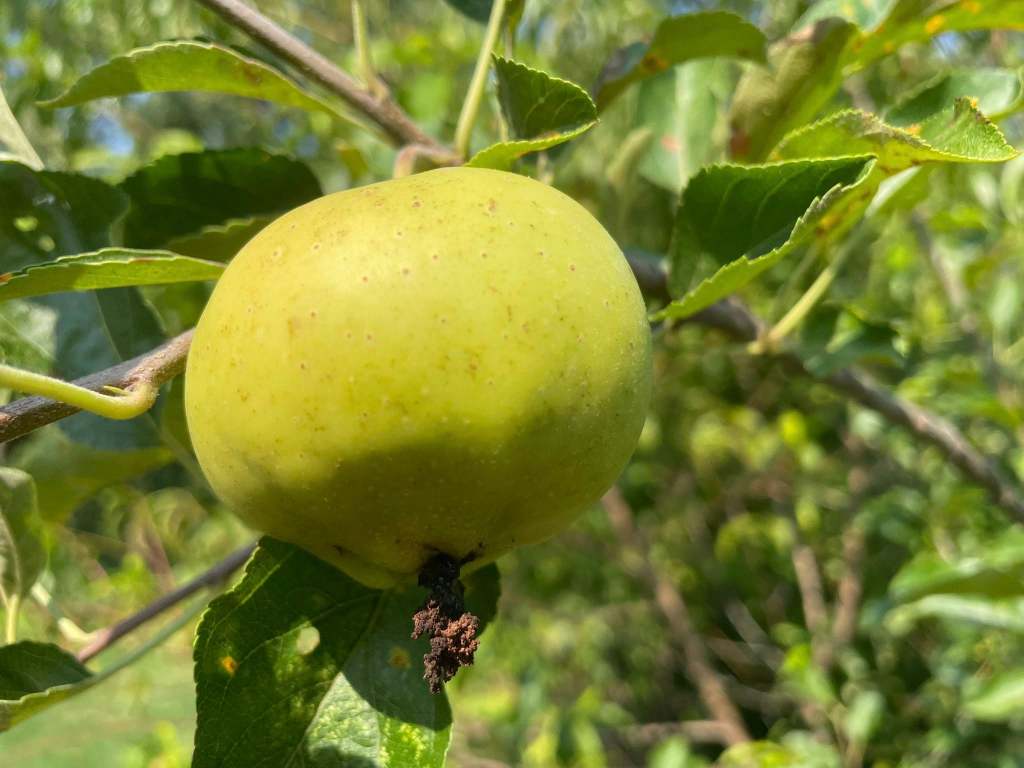
The fruit came, but so did everything else. Fungus spread through the trees. Apple scab, peach leaf curl, rust. Japanese beetles chewed through leaves. Aphids clustered on stems and drained them. By midsummer the damage was clear. Nature wanted to take back what I had planted.

There were some wins. The standard peach tree gave a good yield. Grapes and raspberries came in. Green beans took off in the beds. Garlic I had planted the year before came out strong. But it wasn’t the kind of success I had pictured. The fruit trees that were supposed to carry the year mostly struggled. Other vegetables sputtered. Carrots stayed small. Much of the work I had put in over the seasons seemed to vanish in front of me.

I had underestimated the fight. Palatine is basically a marsh. The damp air itself seems to breed fungus. Even with compost delivered, raised beds, and grow bags, the results fell short. Trying to imagine feeding my family on what I grew this season felt impossible.

I came away with more gratitude for modern farming. There are reasons why agriculture looks the way it does. You see it once you’ve spent time battling pests and fungus by hand. Gardening is worth it, and I’ll keep going, but it is not simple. It humbles you.

People talk about food forests, permaculture, and self-sufficiency. Maybe that works somewhere else. After this year, I’m not so sure about here. I want to believe it can be done, but standing in the garden, looking at the leaves eaten and the fruit diseased, I can’t help but doubt it.

Our Northern Illinois Orchard Pest Report (June 2024)

For two years, our backyard orchard in Northern Illinois has fought aphids, Japanese beetles, leaf curl, rust-like spots, and other fungal damage. We have more than twenty fruit trees: apples, peaches, pears, nectarines, and plums, along with seasonal lemons and limes. We responded with copper, sulfur, neem oil, and direct removal of insects.

This is a dated field report from June 2024, not a universal spray program. Different crops, diseases, products, and stages of growth require different treatment. The product label has to govern the crop, concentration, timing, weather limits, protective equipment, and number of applications. Illinois Extension guidance should be checked before treating a disease in this region.

What We Tried

Copper fungicide: We used copper against fungal symptoms on apples and stone fruit. Our mistake was treating “copper every other week” as a general schedule. Copper can damage foliage, and the right timing depends on the tree, disease, and label. Future applications need to begin with a diagnosis and crop-specific instructions.

Neem oil: We used neem against aphids, beetles, and some fungal problems. It did not remove the need for manual pest control, and it should not be treated as harmless because it is sold as a natural product. We need to follow the label’s crop, temperature, pollinator, and application restrictions.

Sulfur fungicide: We initially mixed sulfur into the larger rotation. That was too casual. Sulfur and oil products can interact badly, so they should not be combined or scheduled close together unless the labels explicitly permit it. We now treat compatibility as a safety question, not an improvisation.

Application and Weather

We used a one-gallon manual pump sprayer and tried to cover the affected trees on dry weekends. Rain complicated the work, but “spray again after rain” is not a sufficient rule. Rainfastness and reapplication intervals belong to the specific product label.

We also learned that timing matters. By the time leaves show extensive damage, some disease-control windows may already have passed. Illinois Extension says peach leaf curl requires one dormant application after leaf drop or before buds swell; treatment after bud break is ineffective. Our earlier instruction to begin a general rotation as buds opened was wrong. We need to identify each disease and follow the label and crop-specific Extension guidance before the season begins.

Manual Pest Control

Japanese beetles still required hands-on removal. We knocked them into soapy water. Aphids could sometimes be brushed or rinsed from a small infestation, although any solution used on the plant still needs to be identified and checked for safety.

The useful lesson was not that one weekly rotation solved the orchard. It was that observation, early diagnosis, weather, labels, and manual control all matter. We saw some infections stop spreading and some trees recover, but visible improvement alone does not prove which spray caused it. The next season should begin with better identification and a separate plan for each crop.